

The gut microbiome is likely the most species-rich ecosystem in our body, and it's increasingly at the center of scientific research.
What interests us here, of course, is above all the connection between the gut microbiome and our overeager housemates, the mast cells. So what do we actually know about these connections, the possible mechanisms of action, and above all, the therapeutic potential?
A quick detour into short-chain fatty acids (SCFAs)
Short-chain fatty acids (SCFAs) are produced when gut bacteria ferment indigestible dietary fiber. The three most important short-chain fatty acids are:
- Acetate (2 carbon atoms)
- Propionate (3 carbon atoms)
- Butyrate (4 carbon atoms)
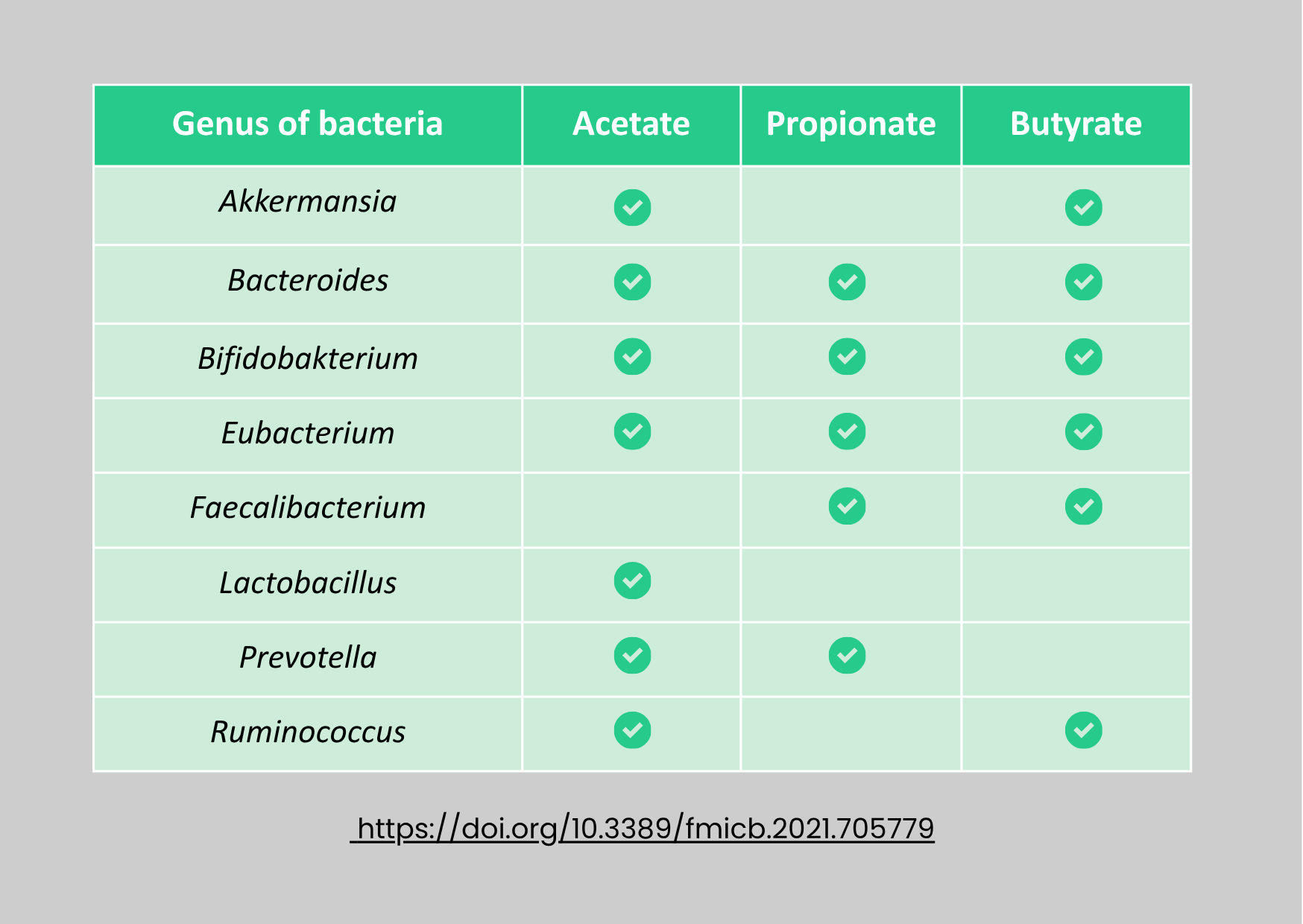
They do not just serve as an energy source for gut cells, they also act as signaling molecules throughout the immune system. A stable ratio between these three fatty acids appears to be important (roughly 60% acetate, and about 20% each of butyrate and propionate). A distribution that deviates strongly from this can indicate an imbalance in gut bacteria, a dysbiosis. The following table gives an overview of commonly occurring bacterial groups and the short-chain fatty acids each produces:
A key review in Nature Reviews Immunology [2] summarizes that SCFAs act through two important main mechanisms: via G-protein-coupled receptors on immune cells (particularly GPR41, GPR43, GPR109A), and via the inhibition of histone deacetylases (HDAC), which produces epigenetic changes in immune cells. These two pathways are central to understanding the studies described in the following.
SCFAs and their effect on gene regulation
SCFAs act not only as metabolic products, but also as regulatory signaling molecules. Butyrate in particular influences so-called histone deacetylases (HDACs), which control which genes a cell reads. Through this, SCFAs can influence processes connected to inflammation, immune regulation, and mast cell activation.
SCFAs as a protective factor for the gut barrier
SCFAs influence the gut barrier not only directly, via the epithelial cells, but also through immunological signaling pathways. Pro-inflammatory cytokines like TNF-α, IFN-γ, or IL-13 can alter the expression of tight junction proteins and thereby increase the permeability of the gut barrier. In experimental models, butyrate in particular showed the ability to partially attenuate this cytokine-induced barrier disruption.
In addition, SCFAs act via G-protein-coupled receptors (GPRs) on immune cells, thereby influencing the release of various cytokines. Among other things, this promotes the formation of anti-inflammatory signaling substances as well as regulatory T cells (Tregs), which play a central role in immune tolerance and in limiting excessive inflammatory reactions.
SCFAs and the regulation of mast cells
A study published in 2024 by a Japanese research group led by Chiharu Nishiyama (Tokyo University of Science) examined for the first time in detail how SCFAs regulate mast cells [3]. The results are remarkable:
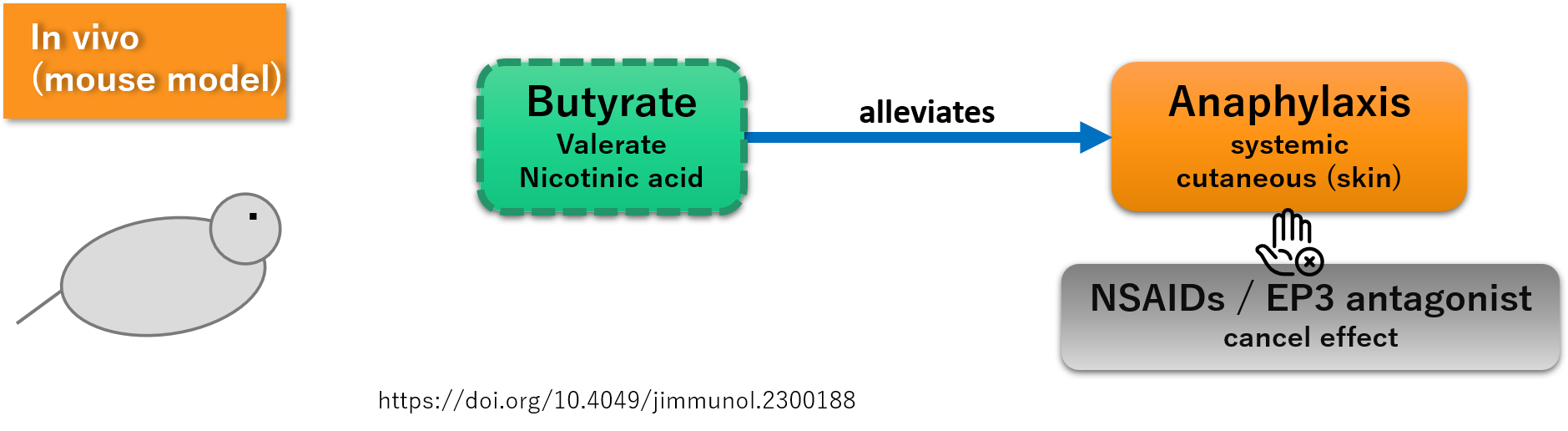
- Oral administration of valerate and butyrate measurably reduced passive systemic anaphylaxis as well as passive cutaneous anaphylaxis in mice.
- Propionate, butyrate, valerate, and isovalerate inhibited IgE-mediated degranulation of mast cells in vitro.
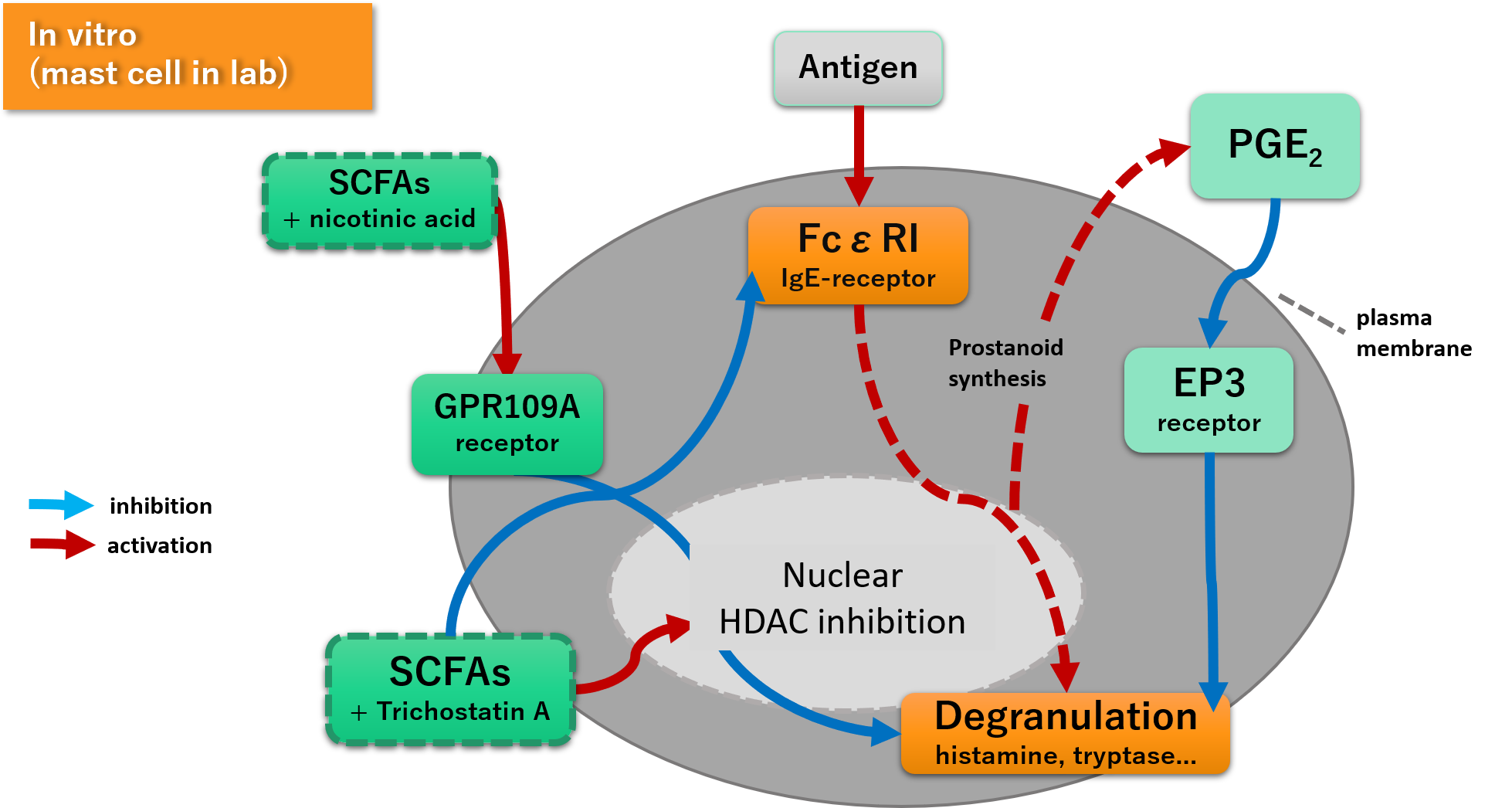
In principle, three main mechanisms were identified:
GPR109A signaling pathway
On mast cells, SCFAs typically bind to the receptor GPR109A. This effect was abolished by the Gi-protein inhibitor pertussis toxin, as well as by GPR109A knockdown. Interestingly, niacin (a well-known GPR109A ligand) also showed similar effects in cutaneous anaphylaxis. Nicotinamide and nicotinamide riboside (NR) do not activate GPR109A and therefore, unfortunately, do not share this effect.
Epigenetic regulation (HDAC inhibition)
SCFAs act as HDAC inhibitors. Among other things, a reduced surface expression of the high-affinity IgE receptor FcεRI was observed, which plays a central role in mast cell activation. A reduced FcεRI expression could raise the activation threshold of mast cells and attenuate excessive immune reactions.
PGE2-mediated inhibition of mast cell activation
Alongside the direct effects on mast cell receptors and gene regulation, SCFAs also influenced the release of prostaglandin E2 (PGE2). The PGE2 that was formed inhibited mast cell degranulation via the EP3 receptor and thereby reduced the release of inflammatory mediators. Interestingly, this effect was abolished by COX inhibitors like aspirin or indomethacin, which points to a central role for the prostaglandin signaling pathway.
This mechanism could be particularly clinically relevant, since it suggests a possible connection between disrupted prostaglandin signaling and reduced SCFA effect. Particularly in NSAID intolerance or Samter's triad (AERD), where COX/PGE2 signaling pathways are altered, this protective mechanism could be partially limited.
Further research: not an isolated finding
The statements of the core study described above are supported by further research. A systematic review [4] evaluated 37 studies and found consistent evidence that acetate, propionate, and butyrate have a protective effect against atopic dermatitis, asthma, and IgE-mediated food allergies, especially in the first years of life.
A research group at Erasmus MC Rotterdam [5] was able to demonstrate that butyrate selectively influences so-called super-enhancer regions in the chromatin of human mast cells, thereby modulating the entire mast cell transcription program. Unlike most other studies, this one was not conducted in a mouse model, but with human mast cells. Its relevance is therefore to be rated higher.
A further study [6] gives indications that butyrate works via an additional pathway in asthma: it inhibits a specific T-helper cell subgroup (Tfh13 cells), responsible for anaphylactic IgE production, via the GPR43 receptor.
Overall, the data appears consistent. SCFAs dampen mast cells and allergic immune reactions through several complementary mechanisms. However, it must be taken into account that most of the data comes from animal and cell culture studies; clinical human studies in MCAS or histamine intolerance syndrome are still largely lacking.
The estrogen-histamine cycle: of particular relevance for endometriosis patients
There is an interesting connection to endometriosis that has been little discussed in clinical practice so far.
Endometriosis lesions create a local microenvironment rich in stem cell factor (SCF), a strong mast cell activator. Studies show that mast cells in endometriosis lesions are predominantly present in granulated form, meaning they are already continuously releasing mediators like tryptase, cytokines, and prostaglandins [7]. These mediators promote pain, nerve growth, fibrosis, and inflammation, exactly the symptoms that are so burdensome for endometriosis patients.
On top of this comes a hormonal amplifying cycle: estrogen stimulates mast cells so that they release histamine. Histamine, in turn, promotes estrogen production. This bidirectional cycle explains why endometriosis symptoms (and histamine symptoms) often escalate in a cycle-dependent way.
In patients with endometriosis who simultaneously show HIS symptoms or have low DAO activity, a purely enzymatic histamine intolerance syndrome (= only deficient histamine breakdown) is insufficient as the sole explanation. More likely is a mast-cell-driven histamine overproduction, permanently driven by the microenvironment of the endometriosis lesions.
Relevance for therapeutic practice: evidence-based approaches
The following therapeutic approaches are sorted by level of evidence.
Fiber-rich diet to promote SCFAs
The simplest and most effective way to increase SCFAs lies in supporting your own gut flora through prebiotic fibers, such as legumes, oats, Jerusalem artichoke, chicory, and unripe bananas (resistant starch). Butyrate-producing bacteria (for example, Faecalibacterium prausnitzii, Roseburia intestinalis) are strongly diet-dependent.
Addressing dysbiosis as a contributing cause
In histamine intolerance syndrome, the connection to gut dysbiosis is well documented [9]. Histamine-degrading bacteria (for example, Lactobacillus rhamnosus) compete with histamine-producing strains (for example, Lactobacillus bulgaricus). Stool diagnostics/microbiome analysis can provide indications, though the interpretation is complex.
Butyrate supplementation
For intestinal inflammation, sodium butyrate or tributyrin are often used. For systemic mast cell activation, there are so far no validated dosages in humans. It should be noted that butyrate products vary very widely in quality and bioavailability.
Niacin as a GPR109A ligand
In the Japanese study [3], niacin reduced cutaneous anaphylaxis via the same GPR109A pathway as SCFAs. Niacin is a well-known supplement, but flushing reactions (themselves a mast-cell-mediated reaction) are common in sensitive individuals. Do not use without medical supervision.
Fermented foods
Caution is warranted here: fermented foods like sauerkraut, kefir, or kimchi are rich in histamine and can massively worsen symptoms in histamine intolerance and MCAS, even though they theoretically support gut flora in principle. Individual testing required.
- In Samter's triad (AERD), the COX/PGE2 signaling pathway is disrupted. Since SCFAs act partly via PGE2, it's unclear whether the full protective mechanism applies. NSAIDs and COX inhibitors, often used in this context, can attenuate the SCFA effect.
- In autoimmune conditions (lupus, etc.), SCFAs can promote regulatory T cells, which is fundamentally positive. However, interactions with immunosuppressive medication are not sufficiently studied.
- Self-experimentation with supplements is risky with complex multiple diagnoses. Dietary interventions, by contrast, are generally safe and can be started alongside medical care.
For professionals: clinical implications
From an immunological perspective, the following considerations arise:
- Microbiome diagnostics as part of the workup in treatment-refractory histamine intolerance syndrome (HIS) or suspected MCAS appears pathophysiologically sensible, but is so far not standardized.
- Endometriosis as a mast cell trigger is rarely considered in allergological contexts. In patients with endometriosis and suspected MCAS, gynecological treatment (hormone regulation, lesion reduction) should be integrated into the overall concept.
- DAO measurement alone is insufficient to distinguish between primary enzymatic histamine intolerance syndrome and mast-cell-driven histamine overproduction. Tryptase follow-up monitoring and, if applicable, 24-hour urine for N-methylhistamine can help.
- SCFA supplementation as adjuvant therapy in mast cell disorders appears a promising, but so far not clinically validated, approach. Patients should be counseled accordingly.
Take-aways
The research on SCFAs and mast cells provides compelling biological mechanisms that explain why gut health, allergies, MCAS, HIS, and endometriosis so often occur together and reinforce one another. The estrogen-histamine-mast cell cycle is a central, so far underestimated, link here.
For those affected, this means: A fiber-rich, low-inflammation diet that promotes SCFA production is a biologically sensible, low-risk approach that can complement medical treatment. So, not a replacement, but a valuable building block.
For professionals, it means: The microbiome-immune axis is not just a trend, but increasingly also mechanistically supported. Integrating it into diagnostic and therapeutic concepts for mast cell disorders is therefore sensible.
References
[1] Baldewijns S, Sillen M, Palmans I, Vandecruys P, Van Dijck P and Demuyser L. The Role of Fatty Acid Metabolites in Vaginal Health and Disease: Application to Candidiasis. Front. Microbiol. 2021. doi:10.3389/fmicb.2021.705779
[2] Mann ER, Lam YK, Uhlig HH. Short-chain fatty acids: linking diet, the microbiome and immunity. Nat Rev Immunol. 2024 Aug;24(8):577-595. doi:10.1038/s41577-024-01014-8
[3] Nagata K, Ando D, Ashikari T, Ito K, Miura R, Fujigaki I, Goto Y, Ando M, Ito N, Kawazoe H, Iizuka Y, Inoue M, Yashiro T, Hachisu M, Kasakura K, Nishiyama C. Butyrate, Valerate, and Niacin Ameliorate Anaphylaxis by Suppressing IgE-Dependent Mast Cell Activation: Roles of GPR109A, PGE2, and Epigenetic Regulation. J Immunol. 2024. doi:10.4049/jimmunol.2300188
[4] Sasaki M, Suaini NHA, Afghani J, Heye KN, O'Mahony L, Venter C, Lauener R, Frei R, Roduit C. Systematic review of the association between short-chain fatty acids and allergic diseases. Allergy, Wiley Online Library. 2024. doi:10.1111/all.16065
[5] Folkerts J, de Bruijn MJW, van IJcken WFJ, Hendriks RW, Stadhouders R. Butyrate Selectively Targets Super-Enhancers and Transcriptional Networks Associated with Human Mast Cell Function. Eur J Immunol. 2025. doi:10.1002/eji.202451680
[6] Yu B, Pei C, Peng W, Zheng Y, Fu Y, Wang X, Wang W, Wang Z, Chen Y, Wang Q, Zhuma K, Gao Y, Xing Y, Jiao M, Liu R, Luo F, Zhang D, Qie J, Yang H, Jin M, Wang L, Chu Y. Microbiota-derived butyrate alleviates asthma via inhibiting Tfh13-mediated IgE production. Signal Transduct Target Ther. 2025 Jun 6. doi:10.1038/s41392-025-02263-2
[7] Wang J, Mao X, Zhu L, Zhang X. Unravelling the Intricate Link: Mast Cells and Estrogen-Induced Pain Sensitization in Endometriosis. Int J Biol Sci. 2025 Sep. doi:10.7150/ijbs.116635
[8] Weiler CR, Austen KF, Akin C, Barkoff MS, Bernstein JA, Bonadonna P, Butterfield JH, Carter M, Fox CC, Maitland A, Pongdee T, Mustafa SS, Ravi A, Tobin MC, Vliagoftis H, Schwartz LB. AAAAI Mast Cell Disorders Committee Work Group Report: Mast cell activation syndrome (MCAS) diagnosis and management. J Allergy Clin Immunol. 2019 Oct. doi:10.1016/j.jaci.2019.08.023
[9] Sánchez-Pérez S, Comas-Basté O, Duelo A, Veciana-Nogués MT, Berlanga M, Latorre-Moratalla ML, Vidal-Carou MC. Intestinal Dysbiosis in Patients with Histamine Intolerance. Nutrients. 2022 Apr.
doi:10.3390/nu14091774