

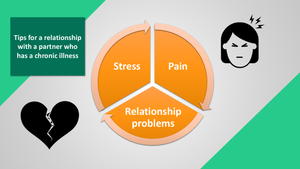
As a therapist who also lives with several chronic conditions myself, it matters a great deal to me to offer guidance not just to patients, but to their partners too, on how a good, fulfilling relationship can still work even alongside serious chronic illness.
It's important that the illness doesn't take over the relationship entirely, leaving no room for togetherness, shared experiences, or the healthy partner's own struggles. Building respectful, appreciative communication habits can help. Here's how:
1. Set regular "communication dates," where each partner gets 15 uninterrupted minutes to share what's on their mind
Scheduling a fixed time where each partner listens to the other for a full fifteen minutes, without interrupting, can genuinely help. In everyday life, it's easy for one partner's worries and thoughts to get pushed aside, often without anyone meaning for that to happen. Everyone gets absorbed in their own struggles, and it's easy not to notice how an abrupt topic change, or brushing past what someone just said, can hurt.
Set speaking time helps each person express their feelings without interruption and lay out more complex thoughts fully. This matters especially for the healthy partner too, whose problems can sometimes feel "small" next to a serious illness. It's important that this doesn't spiral into accusations like: "I can't live my life because you're sick."
At the same time, the ill partner needs to be able to sit with it when their partner reflects that the illness genuinely weighs on them, too. Voicing that should be explicitly allowed, but it shouldn't be used as a weapon either, deployed through direct or indirect blame to make the other person feel guilty.
2. Name feelings of being overwhelmed clearly, and look for solutions together
It's important to name feelings of being overwhelmed directly, since otherwise they tend to build into resentment that ends up affecting the relationship. This should be raised without blame, and ideally not brought up when your partner is in significant pain, or overwhelmed by fear and despair from an especially difficult stretch.
In moments like that, even though it's hard, try to simply be present for your partner and raise the issue during a calmer moment instead, since bringing it up in the heat of the moment carries a high risk of the conversation escalating into mutual blame.

3. Set aside illness-free time together
As a condition progresses, or during periods of high disease activity, life can easily become entirely consumed by the illness: What happens if things get worse? What else can be done?
These are all valid questions, but once conversations about them turn into circular, unproductive rumination, it's worth cutting that energy drain off.
Setting aside dedicated time where the illness simply isn't discussed can help, giving both of you a genuine break from the daily reality of illness. I know that's not always easy to put into practice, so there are more tips on exactly this in the next point. 😉
4. Plan shared activities that work for both partners
Couples often ask me what they can still do together once illness overshadows everything, when one partner can no longer hike, bike, go out, or, in the hardest cases, is bedbound.
This calls for creativity: deliberately seeking out things you can genuinely enjoy together, even if that's just cuddling up on the couch to watch nature documentaries.
Reading a book together is another option, either reading aloud to each other, or each reading independently and discussing it afterward.
I also think it's genuinely important to simply hold each other, hug, and relearn what closeness feels like. Regular physical affection has been shown to have a measurably positive effect on relationship satisfaction for both partners.
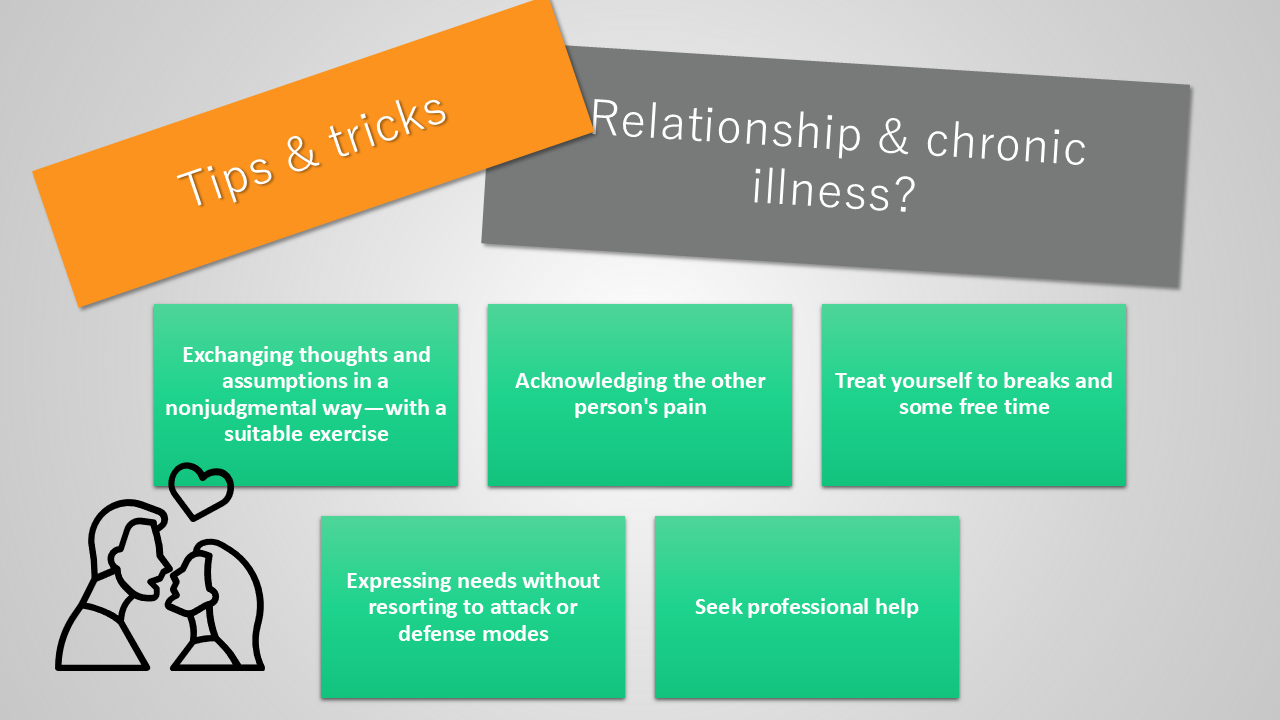
5. Pick your own hobbies back up, even ones your partner can no longer share with you
At the same time, many partners find it hard to keep enjoying previously shared hobbies once their partner can no longer join in. I want to make a genuine case for doing it anyway, even though it can feel difficult for both of you, and even if uncomfortable feelings come up at first.
The partner who can no longer participate might feel a flicker of envy, while the one still enjoying the activity might feel guilty. It helps to remind yourself, in these moments, that the relationship benefits far more when both partners are able to stay reasonably balanced and fulfilled.
It would also be unfair to expect the "healthy" partner to adopt the same restricted lifestyle that even the person living with the illness wouldn't choose for themselves.
As the healthy partner, some sensitivity is genuinely called for here. Maybe your partner still isn't quite ready to hear you gush about a great tennis match you used to play together, and that's worth respecting. People with chronic illness often lose part of their sense of self-worth when they can no longer do the things they once loved.
That said, you should never have to feel punished, or feel like you owe an apology, for pursuing your own hobbies. This is worth talking through openly, and if needed, with professional support.
6. Feel compassion, without taking on the suffering yourself
It's often incredibly hard for the partner living with illness, and possibly unable to work, to look ahead with any optimism or enjoy the present moment, since illness so often means a drastic narrowing of daily life. These changed circumstances tend to cause real pain for both partners.
You might sometimes feel like your care and support go unnoticed or unappreciated. That's a genuinely frustrating feeling, and it's completely understandable. This is worth raising directly, using the approaches above.
It can also help to imagine, just for a moment, what constant pain actually feels like, and how small your world would suddenly become if you were, say, bedbound yourself. Feeling genuine compassion can help you move past frustration, but be careful not to fall into pity either. That doesn't help either of you, and often just amplifies the pain instead.
7. Take care of your own mental health
To actually put the points above into practice, taking care of your own mental health matters too. If the situation starts feeling like too much to carry, don't hesitate to seek support for yourself.
Reaching out for therapeutic support is often an important step toward a more fulfilling life and a stronger relationship, even under genuinely difficult circumstances.
I've also written a companion article focused more on the partner living with the chronic illness, with additional tips from that side. I wish you, and both of you as a couple, real strength and resilience.