This article is part of a series exploring the underlying causes of NSAID intolerance and its best-known presentation, Samter's triad. The first article covered the disruption in fatty acid metabolism and the resulting shift in leukotriene and prostaglandin production. This one focuses on:
Staphylococcus aureus enterotoxins and prostaglandin receptors.
Samter's triad is a condition marked by bronchial asthma, nasal polyps, and aspirin intolerance. Beyond disrupted fatty acid metabolism, possible contributing factors include IgE antibodies against Staphylococcus aureus enterotoxin and changes in certain prostaglandin receptors.
Changes in the nasal microbiome and Staph. aureus
Staphylococcus aureus (Staph. aureus) is a gram-positive bacterium that colonizes many people without causing illness in most cases. It spreads mainly through contact transmission, or by being carried from one colonized site (nasal passages, gut, vagina) to another by the same person.
A major challenge with this bacterium is how well it protects itself against the immune system, for example by forming biofilms, and how resistant it can be to many antibiotics. Methicillin-resistant strains are particularly concerning, since only specialized reserve antibiotics remain effective against them.
Staph. aureus enterotoxins and Th2 inflammation in chronic rhinosinusitis with polyps
Chronic rhinosinusitis with polyps (CRSwNP) is a particularly burdensome symptom complex in people with aspirin intolerance. Aspirin belongs to the class of non-steroidal anti-inflammatory drugs (NSAIDs), which is where the term NSAID intolerance comes from, since intolerance reactions also occur with other drugs in this class, such as ibuprofen and diclofenac.
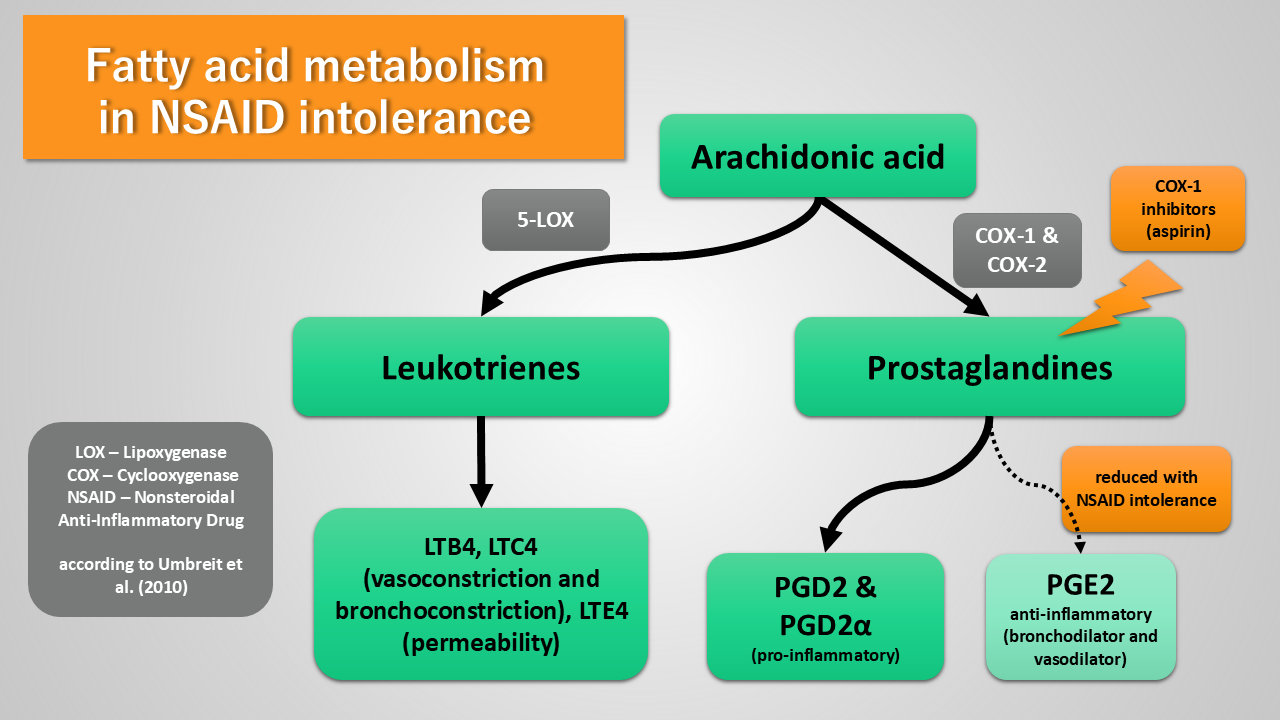
Blocking the cyclooxygenase (COX) enzymes with aspirin or ibuprofen prevents the production of inflammatory and pain-mediating prostaglandins. This is what produces the intended pain-relieving, anti-inflammatory, and decongestant effect.
In people with NSAID intolerance, though, COX-1 blockade leads to increased synthesis of inflammatory leukotrienes. Along with a shortage of anti-inflammatory prostaglandins like PGE2, these leukotrienes are responsible for Samter's triad symptoms such as bronchial asthma. A dedicated article on this blog covers the disrupted fatty acid metabolism behind this in more detail.
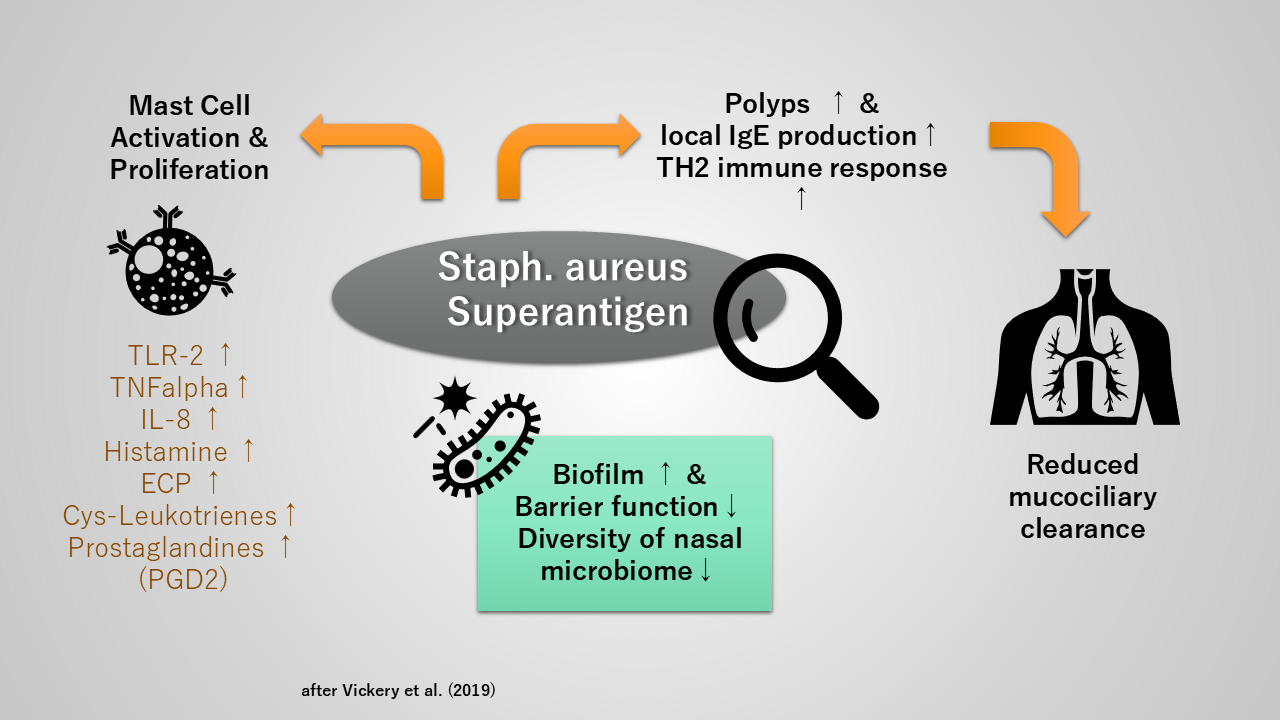
It turns out that the nasal polyps seen in NSAID intolerance result from heightened Th2 inflammation, an allergic-type inflammatory immune response. This response appears to be triggered, at least in part, by Staph. aureus colonization, specifically by certain toxins, known as enterotoxins, that the bacteria produce and that the immune system then reacts to.
In more severely affected patients, the immune system often produces IgE antibodies against the Staphylococcus aureus enterotoxin, so-called Staph. aureus superantigens. This drives an even stronger immune response, since additional immune cells, mainly B cells, get further activated and stimulated to release inflammatory mediators. This cascade ultimately leads to the release of interleukins (IL) such as IL-4, IL-5, and IL-13, immune system signaling molecules that keep IgE production going and promote histamine release. Mast cell numbers also increase as a result.
Disruption of the nasal microbiome and mucosal barrier
Staph. aureus colonization appears to disrupt the mucosal barrier and wound healing process in people with CRSwNP. Researchers attribute this to a disruption in how the nasal microbiome interacts with the host immune system. Staph. aureus strains seem to promote the eosinophil-rich inflammatory response commonly seen in people with polyps, asthma, and NSAID intolerance.
Affected individuals also appear to show more frequent colonization of the nasal passages and sinuses with Proteobacteria and Haemophilus influenzae. These bacteria may play a similar role in establishing Th2 inflammation, potentially through the formation of superantigens or IgE responses similar to those seen with Staph. aureus.
Can Staph. aureus be treated?
Eradicating Staph. aureus is notoriously difficult. Repeated antibiotic courses for sinus infections are thought to actually select for particularly resistant Staph. aureus strains, allowing them to make up a growing share of the nasal microbiome over time and worsening the underlying problem.
That said, antibiotic rinses effective against MRSA, such as mupirocin, have shown short-term symptom improvement in some cases.
Prostaglandin receptor changes in Samter's triad
Alongside Th2 inflammation driven by Staphylococcus aureus superantigens, disrupted fatty acid metabolism plays a major role. Beyond the disruption in the arachidonic acid cascade and changes in prostaglandin E2 levels, changes also appear at the level of the prostaglandin E2 receptors themselves.
Here is a helpful way to think about it: mediators trigger changes in cells and tissue by binding to specific receptors. Depending on the receptor, the same signaling molecule can trigger very different processes. How many receptors are present in a given tissue also shapes the outcome. PGE2 activity is governed by G-protein-coupled membrane receptors (GPCRs) of the E-prostanoid (EP) 1 through 4 subtypes:
- EP1 is relatively understudied, but is present in gut and mast cells. It influences intracellular calcium mobilization.
- EP2 influences bronchodilation and appears to mediate anti-inflammatory effects.
- EP3 also increases intracellular calcium and appears able to constrict pulmonary arteries in the lungs. This receptor also plays a role in mediating pain, coughing, and inflammation.
- EP4 dilates pulmonary arteries and mediates anti-inflammatory effects.
EP2 and EP4 tend to inhibit cell function (via cAMP), while EP1 and EP3 are associated with cell activation (via calcium mobilization).
This interplay appears to be disrupted in the tissue of people with nasal polyposis. Some studies, for example, have found EP2 downregulation. PGE2 likely uses the EP2 receptor to prevent mast cells from producing cysteinyl leukotrienes. Still, the full complexity of this interaction isn't yet completely understood.
PGE2 in aspirin-tolerant versus aspirin-intolerant individuals
In healthy, NSAID-tolerant individuals, PGE2 is produced via cyclooxygenase-2 (COX-2). In people with nasal polyps, tissue-level COX-2 expression appears altered, resulting in reduced PGE2 production.
PGE2 can reduce 5-lipoxygenase (LOX) activity, leading to lower production of pro-inflammatory leukotrienes. According to research from Brigham and Women's Hospital, this effect appears to be mediated through cyclic adenosine monophosphate (cAMP)-dependent protein kinase A, a pathway that also seems to malfunction in affected individuals.
Conclusion
These changes in prostaglandin levels and their receptors likely contribute significantly to the disease process and overall inflammation seen in Samter's triad. In some individuals, a nasal microbiome containing enterotoxin-producing Staph. aureus adds fuel to this inflammatory cascade, keeping it going.
Approaches that help restore balance in the nasal microbiome and in inflamed tissue with disrupted cyclooxygenase and lipoxygenase expression would likely be valuable therapeutically. Monoclonal antibodies like omalizumab or dupilumab can help control Th2 inflammation, but even these typically fall short of fully correcting all the disrupted metabolic and immune mechanisms involved.
References
[1] Staphylococcus aureus | Deutsches Zentrum für Infektionsforschung. Accessed April 24, 2022. https://www.dzif.de/de/glossar/staphylococcus-aureus
[2] Vickery TW, Ramakrishnan VR, Suh JD. The Role of Staphylococcus aureus in Patients with Chronic Sinusitis and Nasal Polyposis. Curr Allergy Asthma Rep. 2019;19(4):21. doi:10.1007/s11882-019-0853-7
[3] Bachert C, Maurer M, Palomares O, Busse WW. What is the contribution of IgE to nasal polyposis? Journal of Allergy and Clinical Immunology. 2021;147(6):1997-2008. doi:10.1016/j.jaci.2021.03.016
[4] Machado-Carvalho L, Roca-Ferrer J, Picado C. Prostaglandin E2 receptors in asthma and in chronic rhinosinusitis/nasal polyps with and without aspirin hypersensitivity. Respir Res. 2014;15:100. doi:10.1186/s12931-014-0100-7
[5] Yoo HS, Shin YS, Liu JN, Kim MA, Park HS. Clinical significance of immunoglobulin E responses to staphylococcal superantigens in patients with aspirin-exacerbated respiratory disease. Int Arch Allergy Immunol. 2013;162(4):340-345. doi:10.1159/000353976
[6] Laidlaw TM, Cutler AJ, Kidder MS, et al. Prostaglandin E2 resistance in granulocytes from patients with aspirin-exacerbated respiratory disease. J Allergy Clin Immunol. 2014;133(6):1692-1701.e3. doi:10.1016/j.jaci.2013.12.1034